Composite vs Wood Hot Tub Deck: Heat Durability and Long-Term Cost
Choosing between composite and wood decking for a hot tub deck in Henderson comes down to two questions: which material survives desert sun around a spa, and which one costs less over ten years instead of just on install day. A hot tub makes both questions harder. The structure carries thousands of pounds of water, shell, and people, and the decking around it takes constant splash, chlorinated water, wet feet, and surface temperatures that climb fast on a July afternoon. This guide walks you through the decision step by step, the way a deck builder would walk a homeowner through it on site.
The short version: wood costs less up front and composite costs less to own, especially around a spa in the Mojave. But the right answer depends on your budget, your tolerance for maintenance, and how long you plan to stay in the house. Here is how to work through it.
Step 1: Confirm the Structure Before You Compare Surfaces
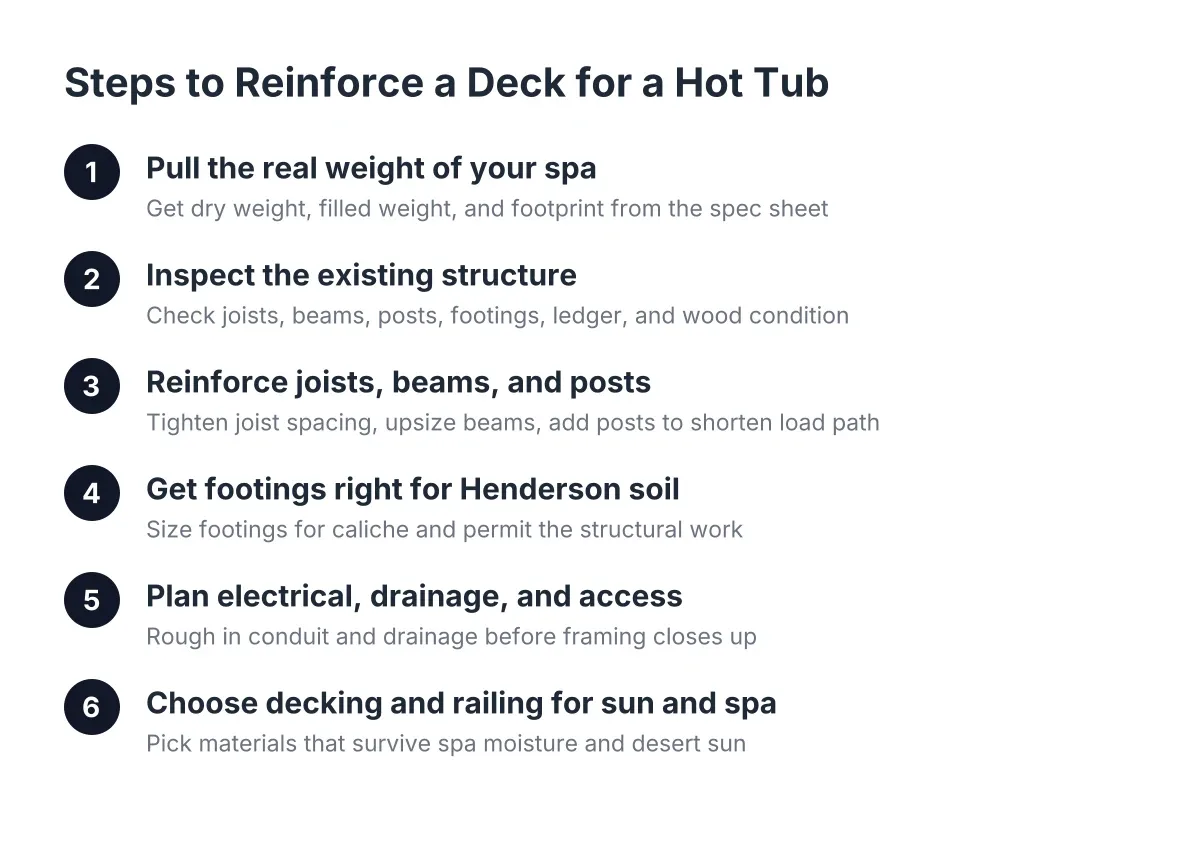
Start with the frame, not the boards. No decking material, composite or wood, makes an underbuilt deck safe for a spa. A filled hot tub concentrates serious weight in a small footprint, so the framing under it needs closer joist spacing, beefier beams, and footings sized for that load. In Henderson, those footings often have to deal with caliche, the cement-hard soil layer common across the valley, which changes how a crew excavates and sets posts.
If you have an existing deck, do not assume it can hold a spa. Most residential decks were framed for people and furniture, not for a tub full of water. Have a deck builder or structural engineer evaluate the framing before you spend a dollar on new boards. This is the one step where a professional opinion is not optional; a failed deck under a full spa is a dangerous and expensive event.
If you are starting from a bare new-build backyard in a community like Cadence or Inspirada, you have an advantage. The hot tub deck installation can be engineered for spa weight from day one, and the surface material becomes a clean comparison instead of a retrofit compromise.
Step 2: How Composite and Wood Decking Handle Henderson Heat
This is where the desert changes the math. Henderson sun is not a side note; it is the main force working against your deck every single day.
Pressure-treated pine and even higher-grade woods like cedar take a beating here. Intense UV breaks down the surface fibers, which leads to graying, checking, cracking, and eventually splintering. If you already own a sun-beaten wood deck, you know the pattern: boards that looked fine for a few years, then started cupping and splitting no matter how often you sealed them. Around a hot tub the damage accelerates, because the wood cycles between soaked and bone dry over and over.
Composite decking resists that cycle. The boards are a blend of wood fiber and plastic with a bonded cap layer, so they do not absorb splash water the way lumber does. They will not splinter under bare feet, which matters more beside a spa than anywhere else on the deck, since everyone walking there is barefoot and the surface is wet.
Does Composite Wood Decking Get Hot Around a Hot Tub?
Yes, composite decking gets hot in direct desert sun, and in peak summer it can get too hot for bare feet, just like most deck surfaces in Henderson. Darker composite boards absorb more heat than lighter ones. However, newer heat-mitigating composite lines and lighter colors stay noticeably cooler, and shade changes everything.
Plan for it instead of around it. A patio cover or awning over the spa zone cuts surface temperature, protects the boards from UV fade, and makes the tub usable in daytime instead of only after sunset. Many Henderson spa decks pair the deck with a covered patio for exactly this reason. Wood gets hot too, for what it is worth; the difference is that wood also cracks and splinters while it heats, and composite does not.
One honest trade-off: composite can feel hotter than light-colored wood in identical sun exposure, depending on the product and color. If your spa sits in full western sun with no shade plan, choose a light, heat-conscious composite color or budget for a patio cover as part of the project.
Step 3: Run the Long-Term Cost Math, Not Just the Install Quote
Compare ten-year ownership cost, not day-one price. Wood wins the first number and often loses the second, especially around a spa in this climate.
Here is what the ownership picture looks like for each material:
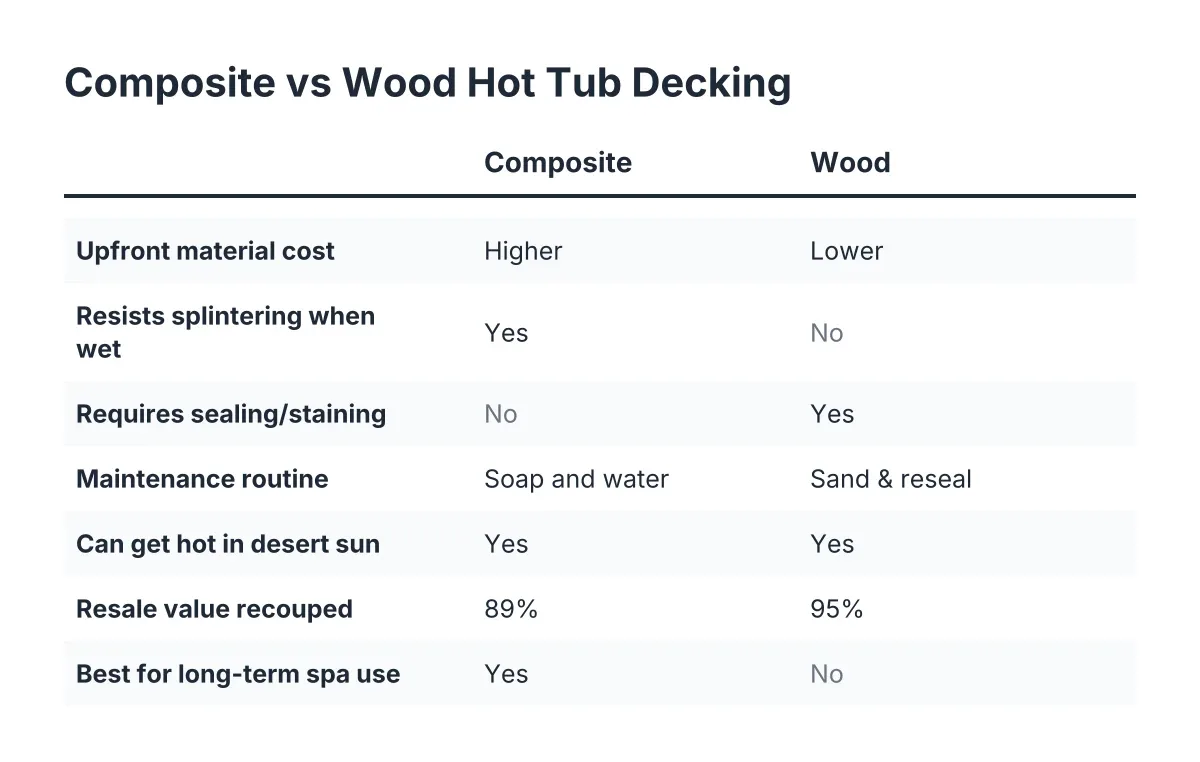
- Wood: Lower material cost up front. Requires cleaning, sanding, and resealing or restaining on a regular cycle, and Henderson sun shortens that cycle compared to milder climates. Expect board replacement over time as splash-zone lumber cracks and cups.
- Composite: Higher material cost up front, sometimes substantially higher for premium heat-mitigating lines. Maintenance is soap-and-water cleaning. No sealing, no staining, no splinter repairs, and fade resistance that holds color through years of UV.
For a rough sense of material pricing, a trex decking cost calculator or similar manufacturer tool gives ballpark board costs for your square footage, and a free deck design tool can help you sketch the layout and spa placement before you talk to a builder. Treat those numbers as starting points; structural reinforcement for spa weight, footings in caliche, railing, and electrical all sit outside what those calculators show.
Resale value cuts the other way. In the 2025 Zonda Cost vs. Value Report, a wood deck addition recoups 95% of its cost at resale while a composite deck recoups 89%. So if you plan to sell within a couple of years, wood's lower cost and strong resale recovery may be the smarter play. If you plan to stay and use the spa for a decade, composite's near-zero maintenance usually wins the total-cost comparison.
Step 4: Decide Where Composite Goes and Where It Does Not
A hot tub project with composite and wood decking is not all-or-nothing. The smartest Henderson spa decks often mix materials by zone, and some placements need special handling.
Can You Put a Hot Tub on Composite Decking?
You can place a hot tub directly on composite decking as long as the framing underneath is engineered for the spa's filled weight. The decking boards are the surface; the joists, beams, and footings do the carrying. Composite boards themselves handle the point loads of spa feet or a full-perimeter base fine when the structure below is built for it.
Two placement notes matter. First, composite decking under a hot tub should sit on reinforced framing with tighter joist spacing than the rest of the deck. Second, leave access to the spa's equipment panel; a removable composite deck section or a recessed design with a service gap saves you from tearing up boards when the pump needs work.
Where a Composite Hot Tub Surround Earns Its Cost
Spend composite money where water and feet concentrate. The surround immediately beside the tub, composite decking steps up to the spa, and the walking path from the house take the most splash and the most barefoot traffic. Those zones punish wood fastest and reward composite most.
For example, suppose a homeowner in Inspirada is finishing a bare backyard with a budget in the mid-teens to low twenties. In that scenario, a builder might frame the whole structure for spa load, run composite on the surround and steps, and put the money saved toward a patio cover over the tub instead of upgrading every square foot to the premium composite line. That mix usually beats spending the entire budget on boards and leaving the spa in full sun.
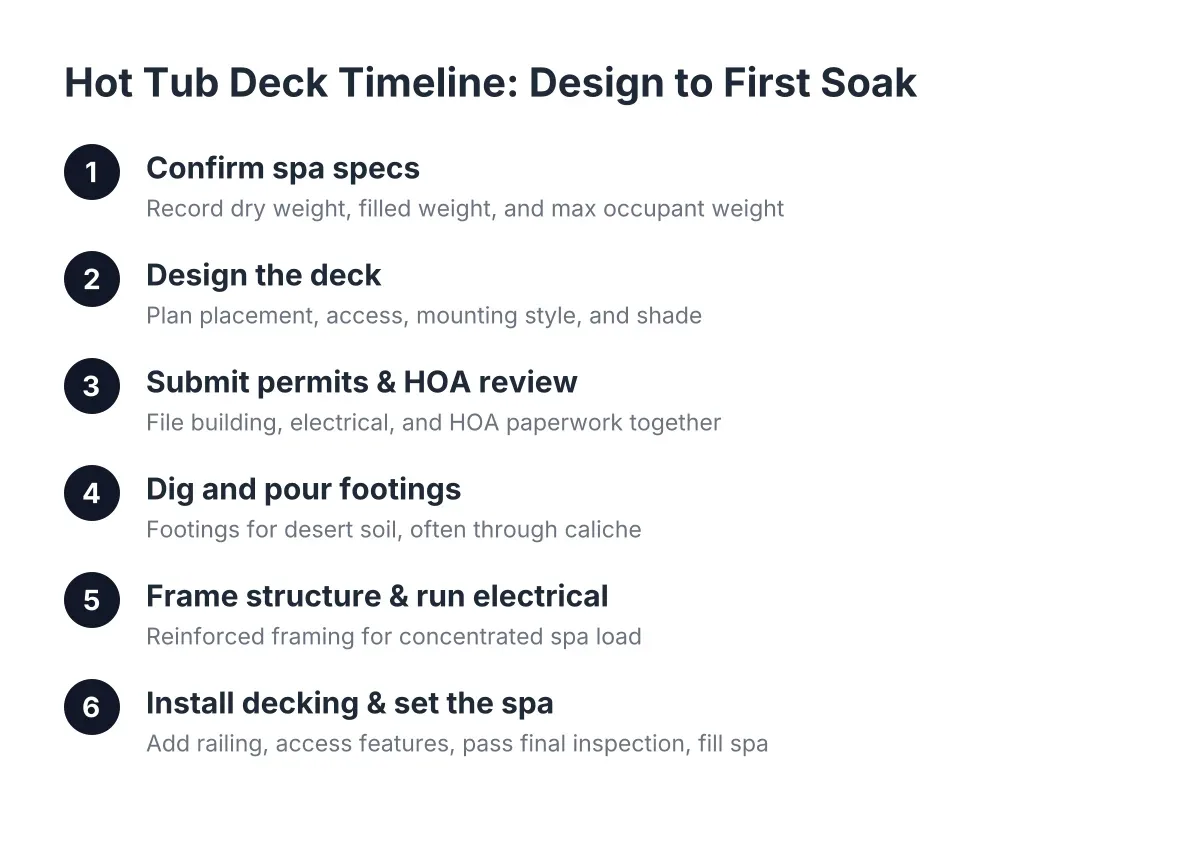
Step 5: Plan Electrical, Access, and Permits Before Framing Starts
Handle the non-decking items early, because they shape the deck design. A spa needs a dedicated electrical circuit with a disconnect within sight of the tub, and the conduit route is far easier to run before the deck is framed than after. Coordinate your electrician and your deck builder on this; retrofitting power under a finished deck adds cost and frustration.
In addition, plan the people logistics. The spa has to physically reach the backyard, which in some Henderson lots means craning it over the house or walking it through a side yard before the deck closes off the path. Build that into the construction sequence.
Permits and design review come next. Structural decks and spa electrical typically run through city or Clark County permit paths, and master-planned communities like Cadence and Inspirada usually require HOA design review for backyard additions. Composite colors and railing styles sometimes face HOA palette rules, so confirm approved materials before ordering boards. A local deck builder who works these neighborhoods regularly will know what documentation each review board expects.
Step 6: Match the Material to Your Situation
Pull the comparison together against your own facts. Here is the honest summary for composite versus wood decking in a Henderson hot tub setting:
- Choose composite if: you plan to stay five-plus years, you want barefoot-safe boards in the splash zone, and you would rather pay more once than sand and reseal on a schedule the desert sun sets for you.
- Choose wood if: up-front budget is the binding constraint, you are comfortable with regular maintenance, or you expect to sell soon and want the stronger resale recoup rate.
- Mix the two if: you want composite durability where it counts, at the surround and steps, without paying composite prices across the entire outdoor living space.
Whatever surface you pick, the structure underneath is the part that actually holds the spa. Get the framing and footings engineered for the load, shade the tub if you can, and the material choice becomes a question of maintenance and budget rather than safety. That is the order a good deck builder works the problem, and it is the order worth following whether your backyard is bare dirt or a twenty-year-old deck ready for its second life.
If you need deck construction, Henderson Deck Co can help.
Prefer to talk it through? Call (725) 425-5179 — a quick call is usually the fastest way to get a straight answer for your situation.